Welcome to Xplore Real Estate – Your Journey Home Starts Here

At Xplore Real Estate Team, we believe that finding the perfect property isn't just about location, square footage, or price points – it's about discovering the place where your life's next chapter unfolds. Whether you're a first-time buyer stepping into homeownership, a growing family seeking more space, or an investor exploring new opportunities, we're here to guide you through every twist and turn of your real estate journey.

Our experienced team combines deep local market knowledge with cutting-edge technology and personalized service to help you navigate today's dynamic real estate landscape. From hidden gem neighborhoods to emerging market trends, we uncover the insights and opportunities that matter most to you.

What sets us apart:

  • Comprehensive market analysis and neighborhood expertise
  • Innovative marketing strategies for sellers
  • First-time buyer guidance and support
  • Investment property consultation
  • Relocation services for out-of-area moves
  • Post-closing support and community connections


Ready to explore your possibilities? Let's discover what's next together. Your dream home is out there – and we know exactly how to find it.

Aug. 21, 2025

From Frenzy to Breathing Room: Buyers Finally Have Time Again

From Frenzy to Breathing Room: Buyers Finally Have Time Again


If you tried to buy a home a few years ago, you probably still remember the frenzy. Homes were listed one day and gone the next. Sometimes it only took hours. You had to drop everything to go and see the house, and if you hesitated even slightly, someone else swooped in and bought it – sometimes even sight unseen.

That kind of intensity pushed a lot of buyers to the sidelines. It was stressful, chaotic, and for many, really discouraging.

But here’s what you need to know: those days are behind us.

Today’s market is moving slower, in the best possible way. And that’s creating more opportunity for buyers who felt shut out in recent years.

The Stat That Changes Everything

According to the latest data, homes are spending an average of 58 days on the market. That’s much more normal. And it’s a big improvement compared to the height of the pandemic, when homes were flying off the shelves in a matter of days (see graph below):
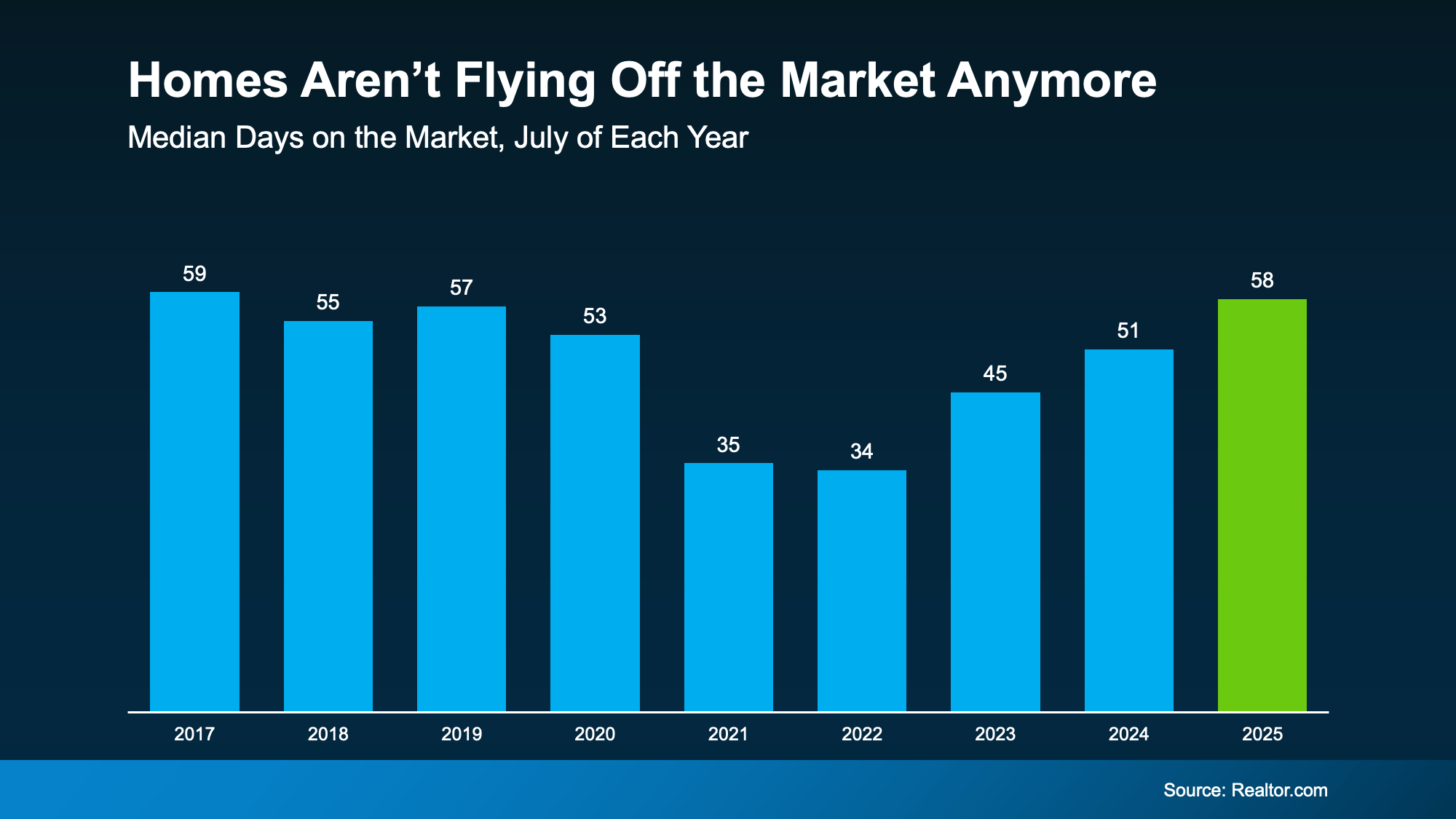
a graph of blue bars with white textThat means you now have more time to make decisions than you have at any point in the past five years. And that’s a big deal. Now, you’ve got:

Time to think.

Time to negotiate.

Time to make a smart move without all the pressure.

More Time Means Less Stress (and More Leverage)

Based on the data in the graph above, you have an extra week to decide compared to last year. And nearly double the time you would have had at the market’s peak.

Back then, fear of missing out drove buyers to act fast, sometimes too fast. Today, the pace is slower, which means you’re in control. As Bankrate puts it:

“For years, buyers have been racing to snag homes because of the fierce competition. But the market’s cooled off a bit now, and that gives buyers some breathing room. Homes are staying listed longer, so buyers can slow down, weigh their options and make more confident decisions.”

With more homes on the market and fewer buyers racing to grab them, the balance has shifted. Bidding wars aren’t as common, and that means you may have room to negotiate. And you can actually take a breath before you make your decision.

More listings + a slower pace = less stress and more opportunity

But, and this is important, it still depends on where you’re buying. Nationally, homes are moving slower. But your local market sets your real pace. Some states are moving faster than others. It may even vary down to the specific zip code or neighborhood you’re looking at. And that’s why working with an agent to know what’s happening in your area is more important than ever. 

To see how your state compares to the national average (58 days), check out the map below:
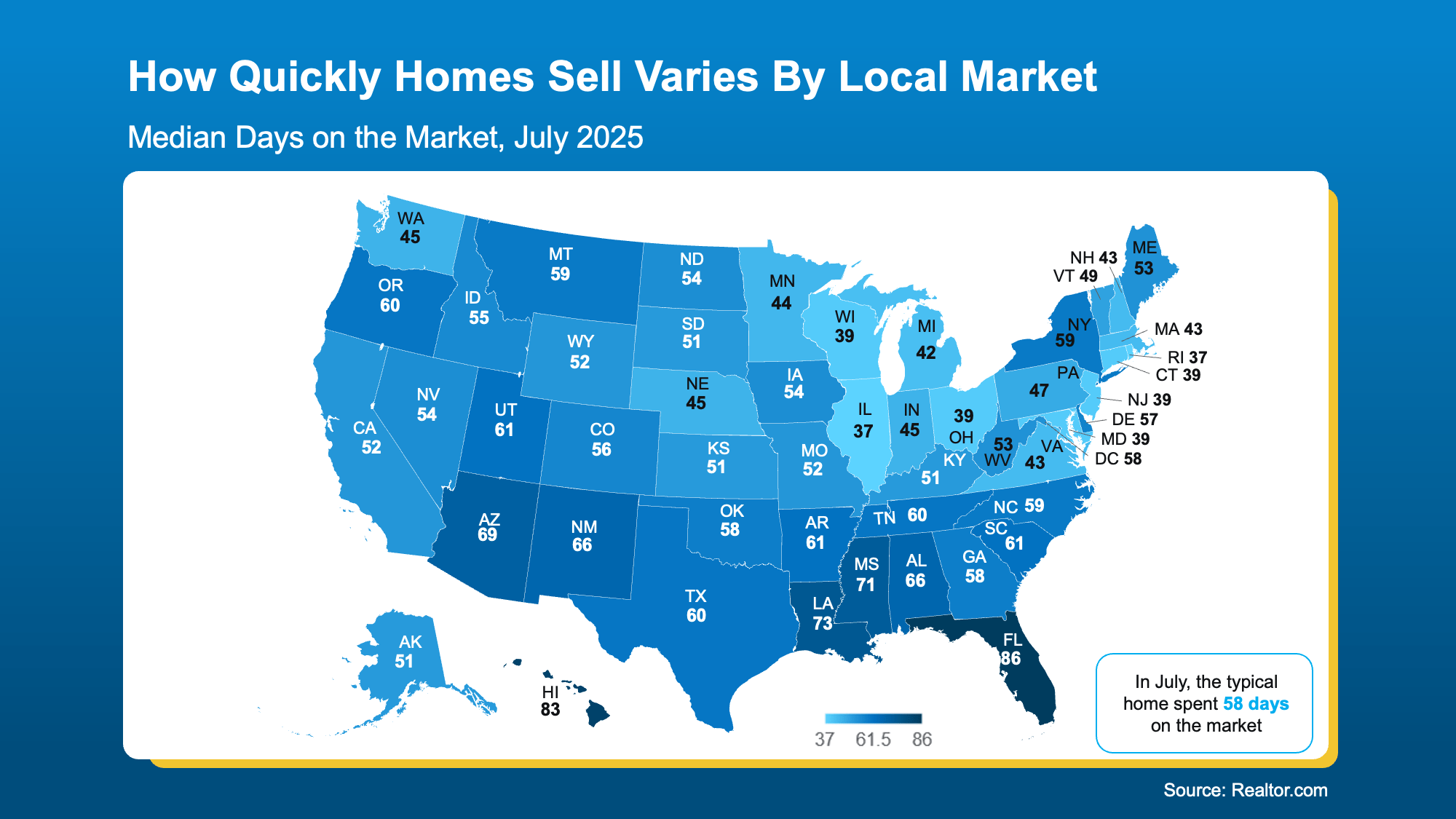
a map of the united statesAs Realtor.com explains:

While national headlines might suggest a buyer’s market is taking hold, the reality on the ground depends heavily on where and what you’re trying to buy. Local trends can diverge sharply from national averages, especially when you factor in price range, property type, and post-pandemic market dynamics.”

A smart local agent can tell you exactly when to move fast and when you can take your time, so you never miss the right home for you.

Bottom Line

If the chaos of the past few years drove you to hit pause, this is your green light. The market’s pace has shifted. You have more time. More options. More power.

And with the right agent guiding you, you’re in the best position you’ve been in for years.

Let’s talk about what the pace looks like in our area, and if now could be the right time for you to re-enter the market.

Posted in Buying a Home
Aug. 18, 2025

More Contracts Are Falling Through. Here’s How To Get Ahead

More Contracts Are Falling Through. Here’s How To Get Ahead.


When you sell a house, the last thing you want is for the deal to fall apart right before closing. But according to the latest data from Redfin, that’s happening a bit more often lately. The good news is, it’s completely avoidable if you lean on an agent for insight into why that is and how to avoid it happening to you.

This June, 15% of pending home sales fell through. That means those buyers backed out of their contracts. That’s not too much higher than the norm of roughly 12% from 2017-2019, but it’s still an increase. And it’s one you don’t want to have to deal with. 

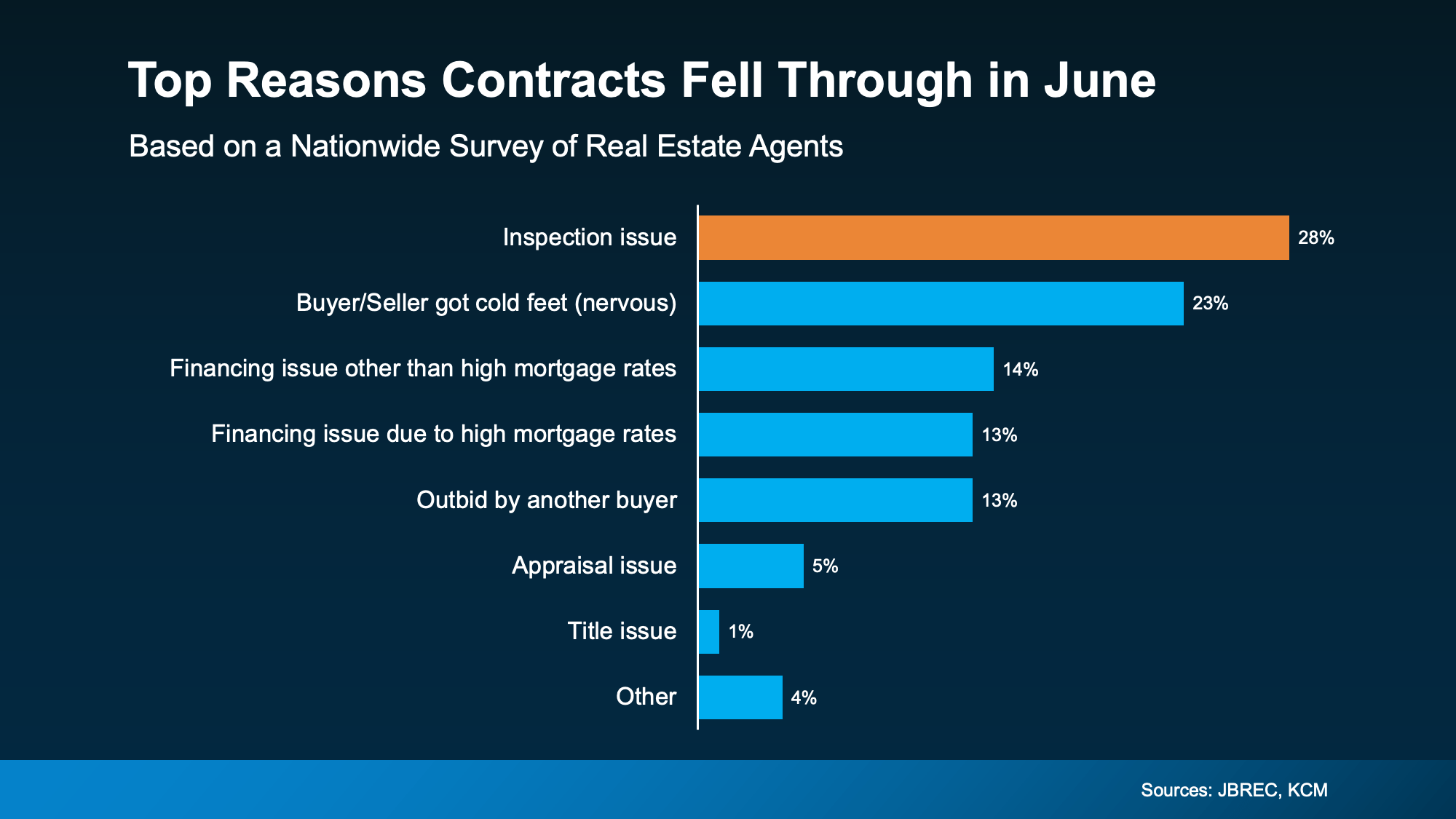
The key to avoiding this headache is knowing what’s causing the issues that lead to a buyer walking away. A recent survey from John Burns Research and Consulting (JBREC) and Keeping Current Matters (KCM) finds that agents reported the #1 reason deals are falling apart today is stemming from the home inspection (see graph below):

a graph of a number of individualsHere’s why. With high prices and mortgage rates stretching buyers’ budgets, they don’t have a lot of room (or appetite) for unexpected repairs.

Not to mention, buyers have more options to choose from now that there are more homes on the market. So, if the inspection turns up a major issue, they may opt to walk away. Afterall, there are plenty of other homes they could buy instead.

Or, if the seller isn’t willing to tackle repairs, a buyer may back out because they don’t want the expense (and the hassle) of dealing with those issues themselves.

The good news is, there’s a way you can get ahead of any unpleasant surprises as a seller, and that’s getting a pre-listing inspection. It’s not required, but the National Association of Realtors (NAR) explains why it’s helpful right now:

“To keep deals from unraveling . . . it allows a seller the opportunity to address any repairs before the For Sale sign even goes up. It also can help avoid surprises like a costly plumbing problem, a failing roof or an outdated electrical panel that could cause financially stretched buyers to bolt before closing.”

What’s a Pre-Listing Inspection?

It's exactly what it sounds like: a professional home inspection you schedule before your home hits the market. Here’s what it can do for you:

  • Give you time to fix what matters. You’ll know what issues could come up in the buyer’s inspection. So, you’ll have time to take care of them before anyone even walks through the door.
  • Avoid last-minute renegotiations. When buyers uncover unexpected issues after you’re under contract, it opens the door for concessions you may have to make like price drops or repairs, or worse, a canceled deal. A pre-listing inspection helps you stay ahead of those things before they become deal breakers.
  • Show buyers you’re serious. When your home is clean, well-maintained, and already vetted, buyers see that. It builds trust and can help you sell faster with fewer back-and-forth negotiations.

The bottom line? A few hundred dollars upfront can save you thousands later.

Should Every Seller Do This?

Not necessarily. Your real estate agent can help you decide what makes the most sense for your situation, your house, and your market. If you decide to move forward with a pre-listing inspection, your agent will guide you every step of the way. They’ll:

  • Advise on whether to fix or disclose each issue
  • Help you prioritize repairs based on what buyers in your area care about
  • Make sure you understand your local disclosure laws

Bottom Line

If you want to avoid potential snags in your deal, a pre-listing inspection could be the way to go. Let’s talk about whether a pre-listing inspection is the right move for your house and market.

Would you rather find out about a major repair now, when you can handle it on your terms – or after you’re under contract, when the clock is ticking?

Posted in Selling Your Home
Aug. 14, 2025

Is It Better To Buy Now or Wait for Lower Mortgage Rates? Here’s the Tradeoff

Is It Better To Buy Now or Wait for Lower Mortgage Rates? Here’s the Tradeoff


Mortgage rates are still a hot topic – and for good reason. After the most recent jobs report came out weaker than expected, the bond market reacted almost instantly. And, as a result, in early August mortgage rates dropped to their lowest point so far this year (6.55%).

While that may not sound like a big deal, pretty much every buyer has been waiting for rates to fall. And even a seemingly small drop like this reignites the hope we’re finally going to see rates trending down. But what’s realistic to expect?

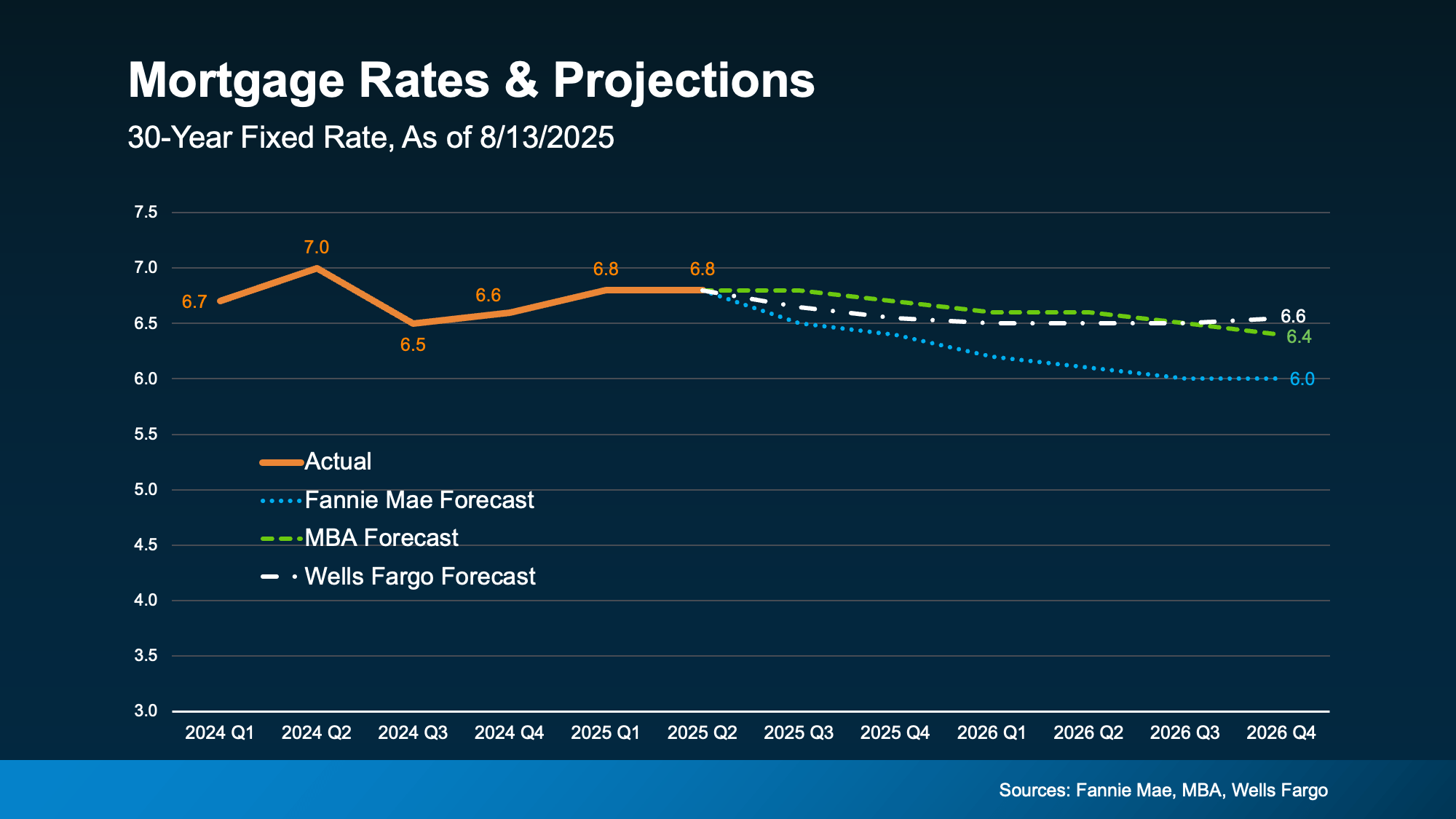
According to the latest forecasts, rates aren’t expected to fall dramatically anytime soon. Most experts project they’ll stay somewhere in the mid-to-low 6% range through 2026 (see graph below):

a graph with numbers and linesIn other words, no big changes are expected. But small shifts, like the one we just saw, are still likely. 

Each time there’s changing economic news, there’s a chance mortgage rates will react. And with so many reports coming out this week, we’ll get a better feeling of where the economy and inflation are headed – and how rates will respond.

What Rate Would Get Buyers Moving Again?

The magic number most buyers seem to be watching for is 6%. And it’s not just a psychological benchmark; it has real impact. A recent report from the National Association of Realtors (NAR) says if rates reach 6%:

  • 5.5 million more households could afford the median-priced home
  • And roughly 550,000 people would buy a home within 12 to 18 months

That’s a lot of pent-up demand just waiting for the green light. And if you look back at the graph above, you’ll see Fannie Mae thinks we’ll hit that threshold next year. That raises an important question: Does it really make sense to wait for lower rates?

Because here’s the tradeoff. If you’re waiting for 6%, you need to realize a lot of other people are too. And when rates do continue to inch down and more buyers jump into the market all at once, you could face more competition, fewer choices, and higher home prices. NAR explains it like this:

"Home buyers wishing for lower mortgage interest rates may eventually get their wish, but for now, they’ll have to decide whether it’s better to wait or jump into the market."

Consider the unique window that exists right now:

  • Inventory is up = more choices
  • Price growth has slowed down = more realistic pricing
  • You may have more room to negotiate = you could get a better deal

These are all opportunities that will go away if rates fall and demand surges. That’s why NAR says:

"Buyers who are holding out for lower mortgage rates may be missing a key opening in the market."

Bottom Line

Rates aren't expected to hit 6% this year. But when they do, you’ll have to deal with more competition as other buyers jump back in. If you want less pressure and more negotiating power, that opportunity is already here – and it might not last for long. It all depends on what happens in the economy next.

Let’s talk about what’s happening in our area and whether it makes sense to make your move now, before everyone else does.

Posted in Buying a Home
Aug. 11, 2025

Online Home-Buying Search Terms Recently Hit 2-Year High

Online Home-Buying Search Terms Recently Hit 2-Year High


Believe it or not, there are clear signs buyer interest is heating up again.

Let’s talk about what’s really going on behind the scenes, and why the housing market might not be as quiet out there as it seems. 

Buyers Are Looking, and Search Trends Prove It

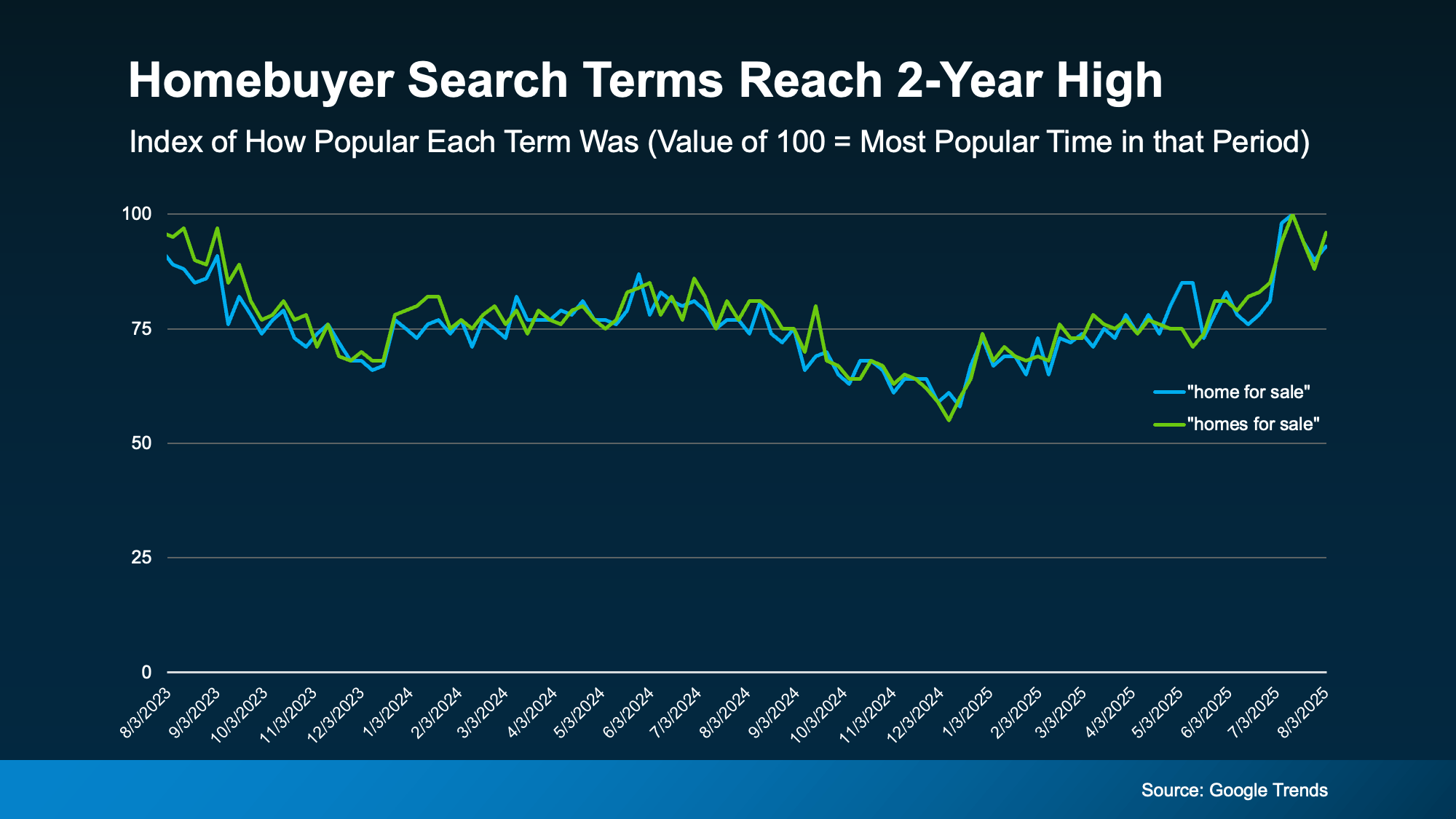
One of the clearest ways to measure what people are thinking about is to look at what they’re searching for online. And according to Google Trends, searches for phrases like “home for sale” have been climbing steadily this year.

The graph below shows an index of two common homebuyer search phrases and how popular they were on Google over the past two years. The higher the line goes, the more popular that phrase was. A 100 on the graph shows the most popular time for each phrase:

a graph of a number of peopleHere’s what really stands out in this data. Both phrases have been trending up overall this year, and they hit a recent high in mid-July. That’s a pretty strong sign that curiosity (and maybe even interest) in buying a home is improving.

That kind of momentum means something. Despite high mortgage rates and home prices, buyers haven’t given up. They're still watching the market. They’re still browsing. And many are just waiting for the right opportunity to act. Maybe your house is exactly what they’re looking for. But you’ll never know if it’s not listed yet.

Now, this doesn’t mean demand is going to surge like it did during the pandemic. It just means some buyers are deciding they can’t wait any longer. And those are exactly the kind of buyers you want. Motivated. Eager. Ready to move when the right house comes along.

So, if you’re holding off on selling because you’re not sure if the demand is there, this data suggests it might be time to rethink your plans. Because while it’s not 2021-level demand, it doesn’t need to be. You don’t need ten offers to sell your home. You just need the right buyer.

And that buyer may be searching for a house like yours right now.

Bottom Line

If you’ve been thinking, “I’ll sell once buyers come back,” you might want to take another look. Online search trends show they’re already interested.

What would make you feel confident putting your house on the market this year? Let’s connect to talk through it.

Posted in Buying a Home
Aug. 8, 2025

Why Selling Without an Agent Can Cost You More Than You Think


Cutting out the agent might seem like a smart way to save when you sell your house. But here’s the hard truth.

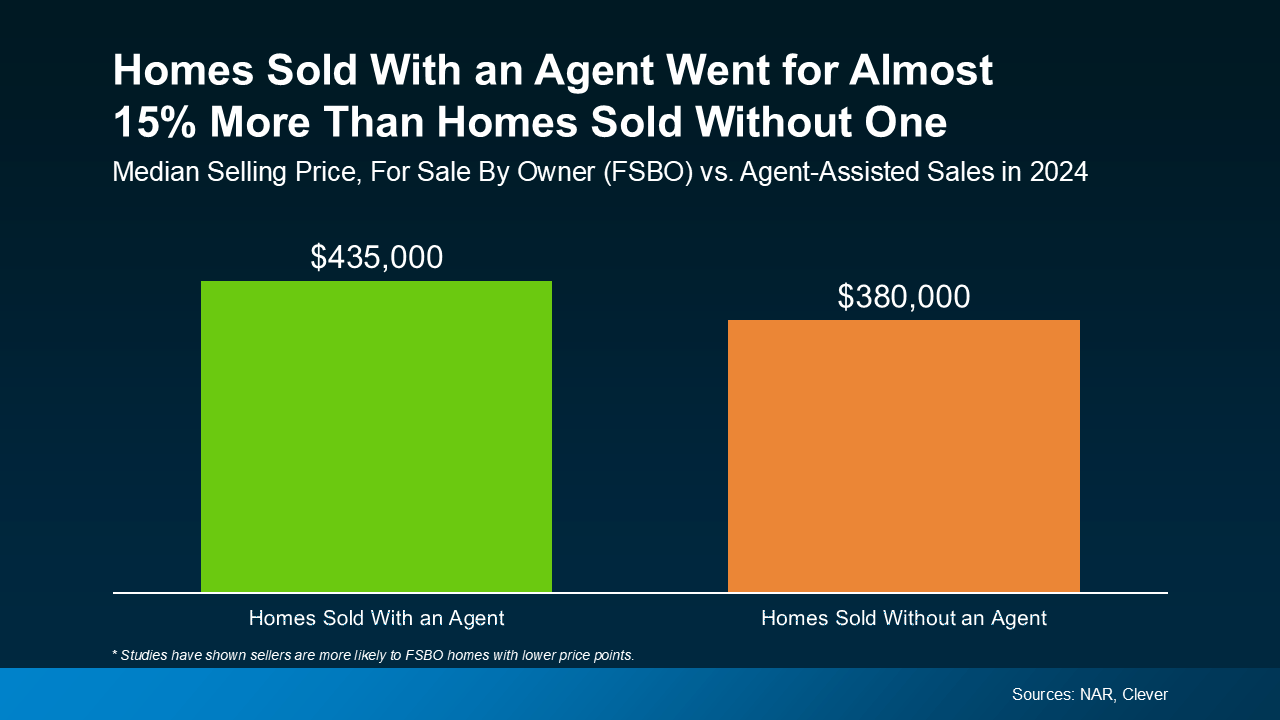
Last year, homes that sold with an agent went for almost 15% more than those that sold without one.

a graph of sales and salesThat gap is pretty hard to ignore. And with more homes on the market to compete with right now, selling on your own is a mistake that’s going to cost you.

This Isn’t the Market for DIY Selling

A few years ago, you might’ve gotten away with a “For Sale By Owner” (FSBO) sign in your yard, navigating the process on your own. That’s because homes were flying off the market and buyers were pulling out all the stops. But that’s just not the case anymore. With more inventory than we’ve seen in years, we’re not in a “list it and they will come” market anymore. You need professional expertise.

A yard sign and some photos you take on your own won’t cut it.

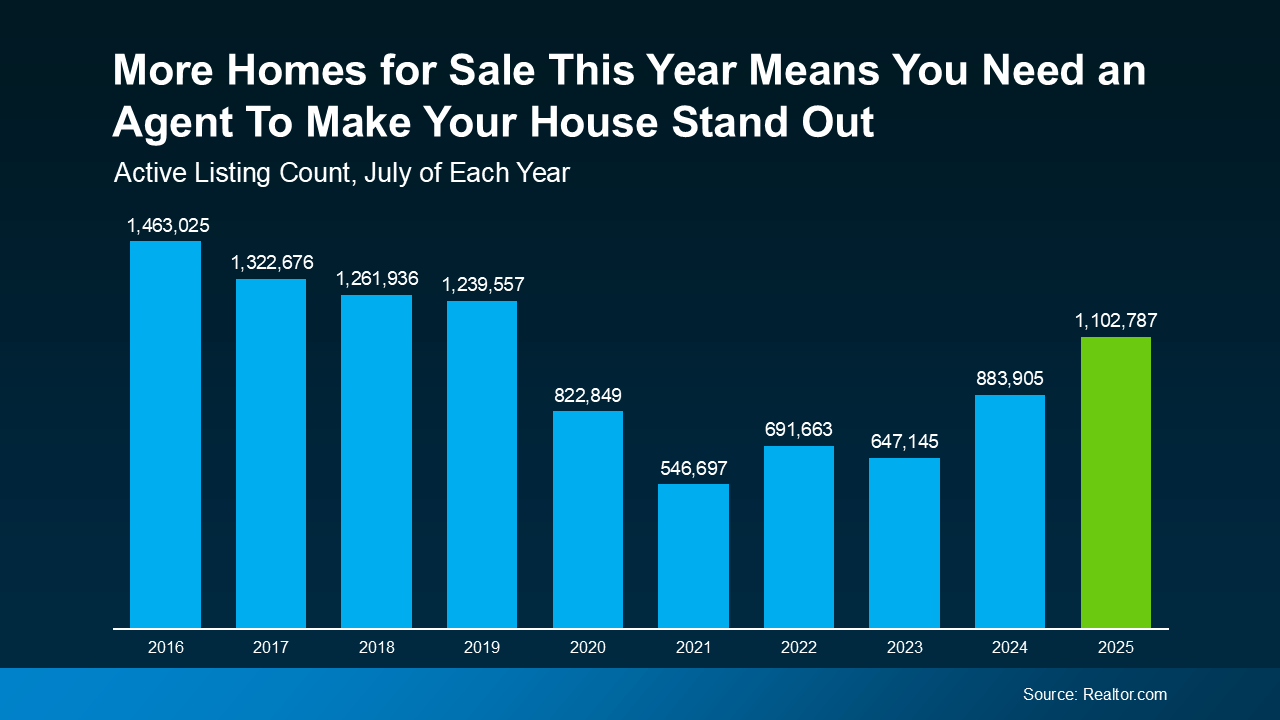
Right now, the housing market is getting back to what most would consider a more normal balance of buyers and sellers, and that really changes the game. According to Realtor.com, the latest number of listings for sale was the highest it’s been in any month of July since 2019 (see graph below):

a graph of blue bars with white textAnd while inventory growth is going to vary by local market, nationally, this graph shows the number of homes for sale is inching back toward normal.

With more listings available, that means buyers can be more selective. They’ll compare your home to others on price, condition, photos, location, and more. If yours doesn’t stand out, it will get skipped over.

More Inventory = More Competition for You

Selling today requires the latest pricing strategy, expert prep work, professional marketing, and strong negotiation skills. And if you’re not bringing all of that to the table, chances are, you’re going to feel it in your bottom line.

More Homeowners Are Turning To the Pros

That’s why even more home sellers are working with agents today. Data from the National Association of Realtors (NAR) shows a record-low percentage of homeowners sold without an agent last year. And the few sellers who tried to sell on their own realized their mistake pretty quickly.

According to Zillow, 21% of homeowners ended up hiring an agent anyway after struggling to sell on their own.

So, why take the risk? With a local pro, you'll have:

  • Pricing precision to attract buyers and maximize your return
  • Expert staging and presentation advice to highlight your home’s best features
  • Pro-level marketing, including the best exposure and access to buyer networks you can’t reach on your own
  • Skilled negotiation to evaluate offers and navigate inspections, protecting your bottom line
  • Local market expertise that helps your listing stand out based on what inventory looks like in your area

An agent's expertise isn’t optional anymore. It’s essential.

Bottom Line

In a market with more listings and pickier buyers, many sellers who try to sell on their own end up working with an agent anyway. So why not start there?

Let’s connect so you have a pro who knows exactly what it takes to sell your house in today’s market, for the best possible price, without leaving money on the table.

Reach out if you want a professional assessment on what your house could sell for today.

Posted in Selling Your Home
Aug. 6, 2025

Second Half of 2025 Forecast

Posted in Real Estate News
Aug. 6, 2025

A Second Home Might Be the Missing Piece in Your Retirement Plan


Are you wondering if you’re on track to retire someday?

According to Intuit, 69% of people say today’s financial environment makes it tough to plan for the future, and 68% aren’t sure they’ll ever be able to retire. That’s why many people are exploring new ways to build stability and long-term income.

And that’s where real estate comes in.

Why Real Estate? Here’s What It Can Do for You

If you’re able to make the numbers work, buying a second home can be a powerful tool for your future retirement. It could help you:

  • Build wealth over time: As home prices rise through the years, your second home should grow in value and increase your net worth.
  • Generate extra income: Renting the home could bring in some extra income you can add to your existing retirement savings. Just remember, some of the rent coming in will need to be used to pay that mortgage and maintain that house. 
  • Profit in the future: You may decide to sell the second home down the road and use the profit from that sale to give your retirement funds a boost.
  • Diversify your financial assets: Real estate offers a tangible asset that can help reduce your dependence on just stocks or savings, making your overall financial picture more stable.

Most Second Homeowners Aren’t Big Investors

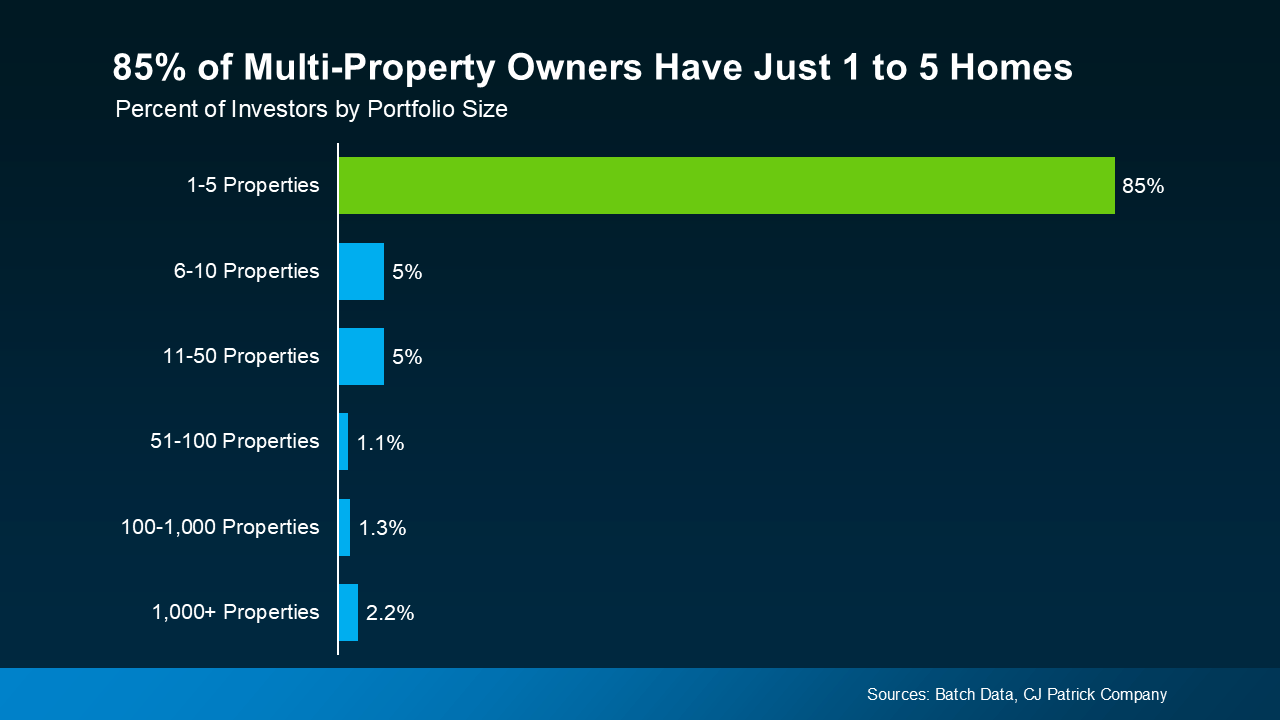
And if you’re thinking: wait, owning multiple homes is only for big investors – data shows that's not necessarily true. Many homeowners who buy an additional property aren’t the big investors you hear so much about. They’re people like your neighbors.

In fact, data from BatchData and CJ Patrick Company shows 85% of people who own more than one property have just 1 to 5 homes (see graph below):

a screenshot of a graphThat means most who own multiple homes are people (not large investors) who’ve bought an extra home to rent out or hold onto for later.

Why Now Might Be the Right Time

And right now, the door may be opening for buyers like you. According to Danielle Hale, Chief Economist at Realtor.com:

“. . . the balance of power in the housing market keeps shifting in favor of homebuyers. . . A confluence of factors—including more homes for sale, rising price cuts, and slower-moving inventory—is giving buyers more leverage than they've had in years . . .

If you live in an area where home prices are expected to rise, buying another property now and selling it later could help fund your future. Or you could rent it out and earn income now.

Start with Just a Few Trusted Pros

If this idea sounds interesting, the most important first step is to connect with a few key people who can guide you through the process:

  • A local real estate agent who understands the market
  • A lender who specializes in second home or investment loans

Surrounding yourself with the right pros can help you make confident decisions from day one.

Bottom Line

Let’s talk about what’s possible and explore whether owning a second home could bring you more security and peace of mind for the road ahead.

If a second home could help you retire earlier or with more freedom, would you want to take a closer look?

Posted in Buying a Home
Aug. 5, 2025

Mortgage Rates Slip: What Buyers and Refinancers Need to Know

📉 Mortgage Rates Slip: What Buyers and Refinancers Need to Know

What’s Trending Now

  • Rates Hit New 2025 Lows
    As of early August, the average 30‑year fixed mortgage rate has dipped to 6.57%, marking the lowest level registered in 2025 so far Federal Reserve+8HousingWire+8U.S. News Money+8.

  • Weekly Movement from Freddie Mac
    Freddie Mac reports that rates eased from 6.74% (July 24) to 6.72% (July 31), continuing a downward trend confined largely within the high‑6% range FRED+3The Mortgage Reports+3CBS News+3.

What’s Behind the Decline?

  • Bond Market Dynamics
    Mortgage rates remain closely tied to the 10-year Treasury yield. A softer recent jobs report nudged bond yields lower and helped push mortgage rates down amid broader market caution HousingWire.

  • Federal Reserve Holds Steady
    The Fed has maintained the federal funds rate at 4.25%–4.50% through June 2025, meaning rate-related relief is still waiting on any policy shift FRED+15en.wikipedia.org+15HousingWire+15.

Looking Ahead: Expert Forecasts

  • By Year‑End Expectations
    Analysts at Realtor.com, Fannie Mae, First American, and others predict 30-year fixed rates may dip toward the low‑6% range (around 6.4%) by late 2025 The Mortgage Reports+1marketwatch.com+1.

  • Longer‑Term Outlook
    Wells Fargo projects average rates near 6.9% in 2025, gradually easing to about 6.5% in 2026, and likely remaining well above pre‑pandemic lows (~3%) investopedia.com+1.

The Bigger Picture: Housing Market Trends

  • Stuck Supply & Rising Prices
    Persistent shortages, slower home construction, and insurance costs rising over 10% continue to challenge affordability—even as rates edge down New York Post+3investopedia.com+3The Mortgage Reports+3.

  • Affordability Crunch
    Many homeowners remain "locked in" at lower rates, suppressing existing home inventory even as median prices remain historically high (~$435K as of June 2025) marketwatch.com.


🏠 What This Means for Buyers and Sellers

For Home Buyers

  • If you're rate-sensitive, now may be a good time to lock in a mortgage—especially if rates dip toward the 6.5%–6.6% range.

  • However, experts warn against delaying too long: any further rate drops are likely to be gradual rather than dramatic The Mortgage Reports.

  • With increased housing inventory and dampening growth in prices, this may offer better negotiating leverage overall.

For Refinancers

  • Current rates below 6.7% offer a window of opportunity—particularly for homeowners refinancing from much higher-pandemic-era rates.

  • But beware “refinancing burnout”: those who benefited from earlier rate drops are less likely to refinance again under modest improvements en.wikipedia.org.


✅ Practical Strategies


  • Get Pre‑Approved Today: Know your credit profile and have your finances sorted to act quickly if rates fall further.

  • Consider Discount Points: Paying upfront can reduce your long‑term rate—but calculate the break‑even carefully.

  • Monitor Economic Data: Inflation reports, Treasury yields, and Fed announcements are key rate drivers.

  • Focus on Affordability Beyond Rates: Factor in stable elements like insurance, local taxes, and longer-term market conditions—not just headline rate changes.

#MortgageRates2025 #CentralValleyRealEstate #StocktonHomes #NorCalLiving #StartYourSearch #xplorecentralvalley #HomeBuyingTips

Posted in Real Estate News
Aug. 4, 2025

The Truth About Down Payments (It’s Not What You Think)


Buying a home is exciting… until you start thinking about the down payment. That’s when the worry can set in.

“I’ll never save enough.”

“I need a small fortune just to get started.”

“I guess I’ll just rent forever.”

Sound familiar? You’re not alone. And you’re definitely not out of luck.

Here’s the thing: a lot of what you’ve heard about down payments just isn’t true. And once you know the facts, you might realize you’re a lot closer to owning a home than you think.

Let’s break it all down and bust some big down payment myths while we’re at it.

Myth 1: “I need to come up with a big down payment.”

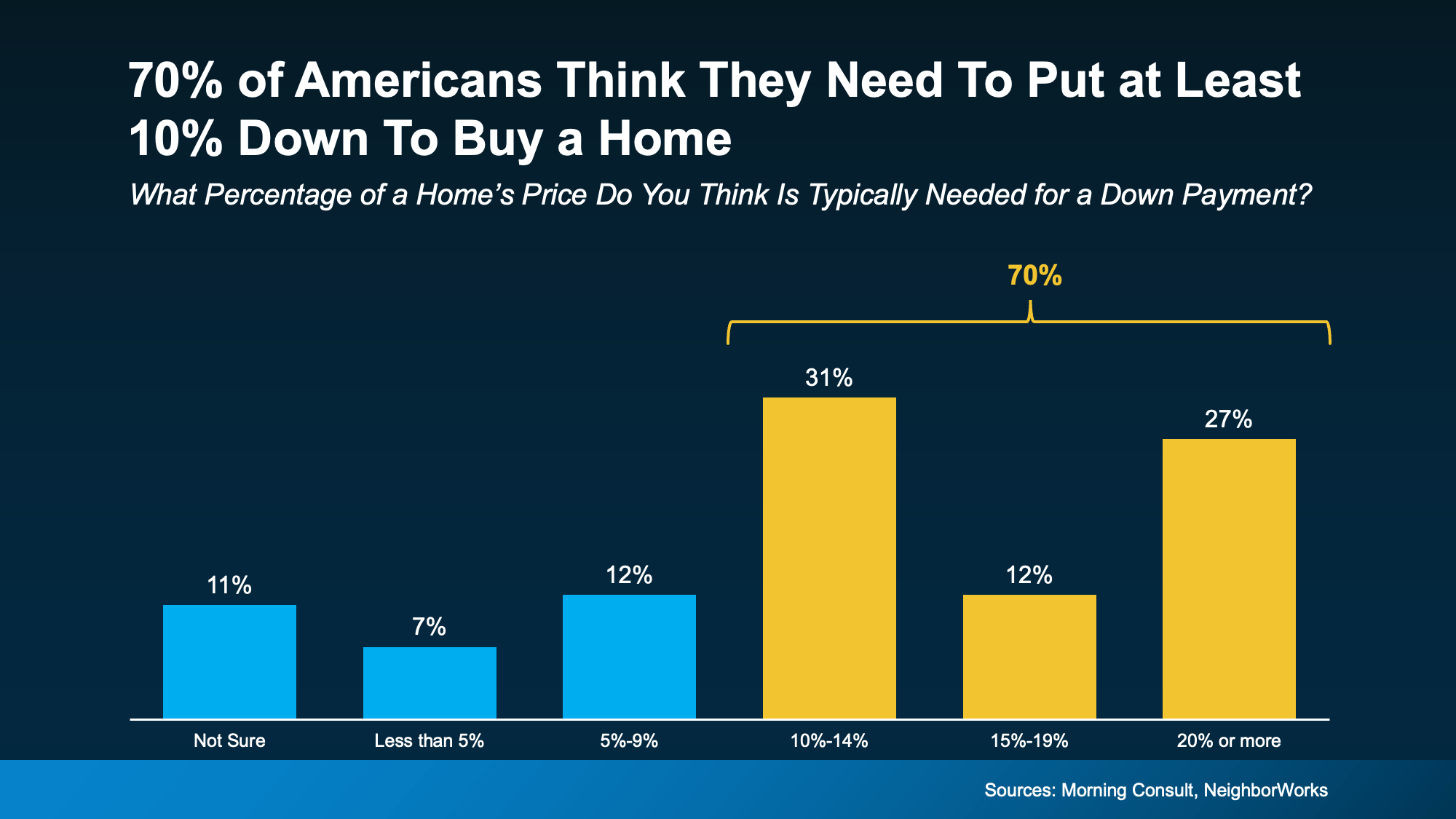
This one stops a lot of people in their tracks. A recent poll from Morning Consult and NeighborWorks shows 70% of Americans think they need to put at least 10% down to buy a home. And 11% aren’t sure what’s required at all (see graph below): 

a graph of a number of blue and yellow squaresThe truth? According to the National Association of Realtors (NAR), the typical down payment for first-time buyers has been between 6% and 9% since 2018. But there’s more to the story. If you qualify for an FHA loan, you may only need to put 3.5% down. And VA loans typically don’t require a down payment at all. So, there are options out there that can really make a difference for some buyers.

Myth 2: “It’ll take forever to save up for a down payment.”

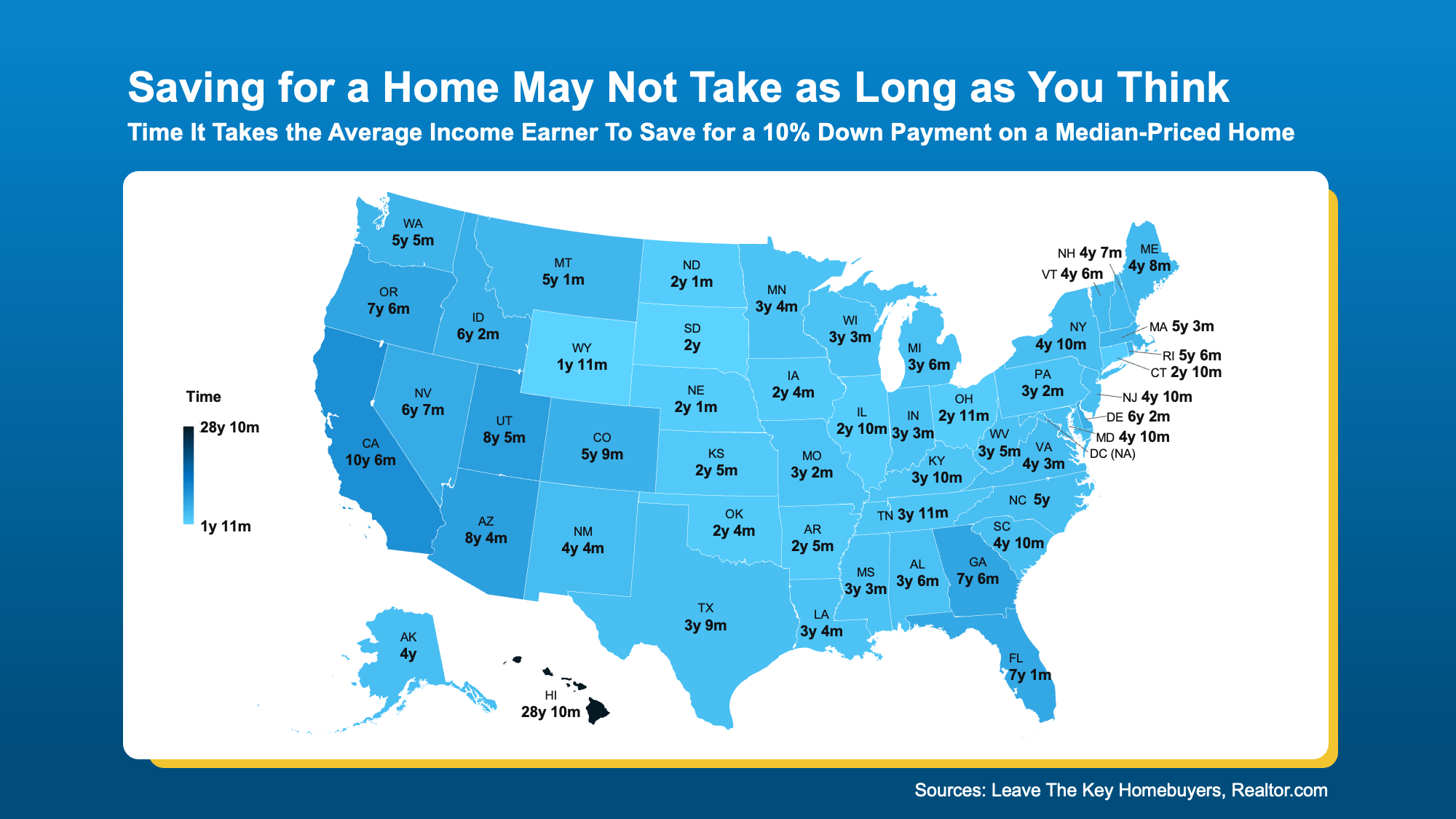
Sure, saving can take time. But it may not have to be as long as you think. In many states, reaching your goal can happen faster than you might expect, especially when you know your budget and have a clear savings plan.

According to a new study, the amount of time varies depending on where you live. The map below shows, on average, how many years it takes to save up for a 10% down payment based on typical home values and income levels in each state (see map below):

But remember, in most cases you won’t even need a down payment as large as 10%. Plus, no matter how much money you end up putting down, it won’t all have to come out of your pocket. Here’s why.

Myth 3: “I have to do it all on my own.”

This is one of the biggest myths of all. The reality is, there are thousands of down payment assistance programs out there, and the same poll from Morning Consult and NeighborWorks shows 39% of people don’t even know about them. That means a lot of potential homebuyers could already be closer to homeownership – they just don’t realize it. 

These assistance programs are designed to help people like you who are ready to own a home but just need a little support getting started. As Miki Adams, President at CBC Mortgage Agency, explains:

“With high interest rates and soaring home prices, down payment assistance is more essential than ever.

Bottom Line

If you’ve been putting off buying a home because the down payment feels like too much to tackle, let’s talk. You may not need as much as you think, and there are plenty of resources out there, so you don’t have to do it alone. You just need an expert to point you in the right direction.

If a down payment wasn’t holding you back, would you be ready to start your home search?

Posted in Buying a Home
July 28, 2025

Multi-Generational Homebuying Hit a Record High

Multi-Generational Homebuying Hit a Record High – Here’s Why


Multi-generational living is on the rise. According to the National Association of Realtors (NAR), 17% of homebuyers purchase a home to share with parents, adult children, or extended family. That’s the highest share ever recorded by NAR (see graph below):

a graph of sales growthAnd what’s behind the increase? Affordability. NAR explains:

“In 2024, a notable 36% of homebuyers cited “cost savings” as the primary reason for purchasing a multigenerational home—a significant increase from just 15% in 2015.”

In the past, caregiving was the leading motivator – especially for those looking to support aging parents. And while that’s still important, affordability is now the #1 motivator. And with current market conditions, that’s not really a surprise.

Pooling Resources Can Help Make Homeownership Possible

With today’s home prices and mortgage rates, it can be hard for people to afford a home on their own. That’s why more families are teaming up and pooling their resources.

By combining incomes and sharing expenses like the mortgage, utility bills, and more, multi-generational living offers a way to overcome financial challenges that might otherwise put homeownership out of reach. As Rick Sharga, Founder and CEO at CJ Patrick Company, explains:

“There are a few ways to improve affordability, at least marginally. . . purchase a property with a family member — there are a growing number of multi-generational households across the country today, and affordability is one of the reasons for this.”

But this strategy doesn’t just help with affordability. It may even allow you to get a larger home than you’d qualify for on your own and that gives everyone a bit more breathing room. As Chris Berk, VP of Mortgage Insights at Veterans United, explains:

“Multigenerational homes are more than a trend: They are a meaningful solution for families looking to care for one another while making the most of their homebuying power.”

And momentum may be growing. Nearly 3 in 10 (28%) of homebuyers say they’re planning to purchase a multi-generational home.

Maybe it’s a solution that would make sense for you too. The best way to find out? Talk to a local real estate agent who can help you decide if this option would work for you.

Bottom Line

If your budget feels tight, buying a multi-generational home could be a smart solution.

Would you ever consider buying a home with a family member? Why or why not? 

Let’s connect to talk through your options.

Posted in Real Estate News